Introduction
Meaning and Definition of Robotics
Robotics represents one of the most transformative frontiers of modern science and engineering. At its core, robotics is an interdisciplinary field that combines mechanical engineering, electrical engineering, computer science, cognitive science, and cybernetics to design, construct, operate, and apply automated machines known as robots. The term “robot” itself originates from the Czech word “robota,” which translates to forced labor or hard work, introduced to the world by playwright Karel Čapek in his 1920 science fiction play, R.U.R. (Rossum’s Universal Robots). However, the modern definition of robotics technology has evolved far beyond the concept of mere mechanical servitude.
Today, robotics is defined as the study and practice of creating autonomous or semi-autonomous physical entities capable of carrying out series of actions automatically, sensing their environment, processing information, and executing precise physical tasks. A true robot exhibits three fundamental characteristics: sensing, processing, and acting. It must perceive the physical world around it through various sensors, compute or reason about that sensory data using control algorithms or artificial intelligence, and execute physical motions or tasks via actuators. This distinguishes robotics technology from purely virtual software programs, as well as from simple, unprogrammed mechanical devices like a traditional watermill or a manual toaster.
The scope of robotics encompasses the development of smart machines that can mimic human actions, extend human capabilities, or operate in environments that are entirely inaccessible or highly hazardous to biological organisms. By integrating advanced software with rugged physical infrastructure, robotics engineering aims to create systems that optimize efficiency, guarantee precision, and introduce unprecedented levels of flexibility into workflows spanning every major sector of human civilization. The future of robotics lies in transitioning these machines from rigid, pre-programmed automatons into highly adaptive, learning entities capable of collaborating safely alongside humans.
History and Evolution of Robotics
Early Automation Systems
The lineage of modern robotics can be traced back thousands of years to ancient civilizations, where early inventors and engineers sought to replicate biological motion through mechanical means. Ancient Egyptian, Greek, and Chinese records describe complex water clocks, automated puppetry, and mechanical birds powered by hydraulics, pneumatics, or falling weights. The Greek mathematician Hero of Alexandria, writing in the first century AD, detailed designs for automated theaters and programmable mechanisms powered by ropes and pegs, which many historians consider the earliest precursors to digital programming.
During the Islamic Golden Age, the brilliant 12th-century engineer Al-Jazari designed and constructed an array of remarkable automata, including automated flush mechanisms, musical automata boats, and programmable humanoid hand-washing devices. His work relied heavily on camshafts, crankshafts, and escapement mechanisms, laying the foundational mechanical frameworks that would later drive the Industrial Revolution. By the 18th century, European clockmakers and artisans had perfected the creation of highly intricate, spring-driven automata. Masterpieces such as Jacques de Vaucanson’s mechanical duck and Pierre Jaquet-Droz’s “The Writer” could write letters, play musical instruments, and mimic biological digestion with astonishing mechanical fidelity, capturing the imagination of the public and demonstrating that complex behavioral sequences could be entirely encoded within physical machinery.
Development of Modern Robots
The paradigm shifted radically in the mid-20th century with the convergence of mechanical engineering, electronics, and digital computing. The true birth of modern industrial robots occurred in 1954 when American inventor George Devol filed a patent for a “Programmed Article Transfer” device. Devol, alongside entrepreneur Joseph Engelberger, founded Unimation—the world’s first robotics company. In 1961, their breakthrough robot, the Unimate, was installed at a General Motors plant in New Jersey. The Unimate was a massive, hydraulically driven robotic arm designed to perform dangerous, repetitive tasks: lifting glowing pieces of hot die-cast metal from production lines and welding them onto automotive chassis.
The success of the Unimate ignited a global technological race. In Europe, companies like KUKA and ASEA (later ABB) developed the first fully electrically driven industrial robots in the 1970s, eliminating the leaks and unpredictable pressures of hydraulic systems. Meanwhile, academic institutions pushed the boundaries of robot mobility and intelligence. In 1969, Victor Scheinman at Stanford University invented the Stanford Arm, an all-electric, 6-axis articulated robot that allowed for highly sophisticated path planning and precise assembly operations. Concurrently, the Stanford Research Institute developed “Shakey the Robot,” the first mobile robot equipped with artificial intelligence. Shakey could navigate through a series of rooms, perceive obstacles using a vision camera, and formulate multi-step plans to achieve goals, successfully bridging the gap between physical automation technology and computer science.
Importance of Robotics in Today’s World
In the contemporary global landscape, robotics technology has transitioned from an experimental industrial luxury into a critical structural pillar of global supply chains, healthcare systems, and infrastructure networks. The modern world operates at a scale, speed, and precision that human labor alone can no longer sustain. Industrial robots form the backbone of modern manufacturing, assembling electronics with micrometer-level accuracy, painting automotive components with flawless uniformity, and managing the relentless logistical demands of massive e-commerce fulfillment centers. Without the deployment of these smart machines, the mass production of affordable consumer goods, vehicles, and medical devices would grind to a halt.
Beyond traditional manufacturing floors, the importance of robotics manifests profoundly in human safety and well-being. Robots are routinely deployed to handle high-risk duties that would otherwise cost human lives, such as bomb disposal, structural inspections of nuclear reactors, deep-sea oil well repairs, and toxic chemical cleanup operations. In clinical environments, specialized medical robots allow surgeons to perform minimally invasive procedures with a steady-handed precision that exceeds biological limitations, radically reducing patient recovery times and surgical complications. As societies navigate aging demographics and labor shortages, robotics serves as a vital tool to maintain productivity, preserve economic vitality, and elevate human workers above hazardous, demeaning, or physically debilitating labor.
Why Robotics Is the Future of Automation and Smart Machines
The trajectory of global technological development points directly to a future where robotics technology serves as the primary physical instantiation of the digital mind. Traditional automation systems were rigid, fixed in place, and completely blind to changes in their environment. If a part on a conveyor belt was misaligned by a fraction of an inch, the entire production line would jam. The future of automation, however, demands smart machines that possess structural adaptation, cognitive resilience, and situational awareness. Robotics is the vital medium through which these attributes are achieved, combining adaptive physical bodies with cognitive computational architectures.
As we march deeper into the digital age, the convergence of high-density energy storage, advanced materials, and ubiquitous connectivity allows robots to operate autonomously for extended periods across unpredictable landscapes. These smart machines do not merely execute pre-written scripts; they continuously evaluate their operational environment, learn from unexpected disruptions, and recalibrate their behavioral parameters in real time. This shift from deterministic automation to cognitive automation ensures that robotics will redefine human interaction with the physical world, creating systems that can safely manage farms, navigate bustling city streets, maintain public infrastructure, and explore deep space with minimal human intervention.
Relationship Between Robotics, Artificial Intelligence, and Machine Learning
A frequent point of confusion in popular discourse is the precise distinction and overlapping relationship between robotics, artificial intelligence (AI), and machine learning (ML). While these terms are sometimes used interchangeably, they represent distinct scientific domains that converge to create modern smart machines. Robotics represents the physical body—the mechanical linkages, joints, actuators, and hardware control systems that interact directly with the tangible universe. Artificial intelligence is the broader cognitive framework—the computational algorithms, logical systems, and decision-making structures that simulate cognitive functions such as reasoning, planning, and problem-solving.
Machine learning is a specialized subset of artificial intelligence focused on training computational models to recognize intricate patterns within vast datasets without being explicitly programmed for every scenario. To understand how these fields intertwine, consider an autonomous delivery robot navigating a crowded urban sidewalk:
- The Robotics Component: The chassis, electric motors, wheels, battery management modules, and low-level motor controllers that physically propel the vehicle forward and physically execute turning maneuvers.
- The Artificial Intelligence Component: The high-level pathfinding algorithms, obstacle-avoidance logic, and sensory integration frameworks that determine the optimal route from point A to point B while adhering to traffic rules and prioritizing pedestrian safety.
- The Machine Learning Component: The convolutional neural networks trained on millions of images to identify whether an object detected by the robot’s onboard camera is a bicycle, a pedestrian, a concrete pillar, a stray animal, or a shadow on the pavement.
Without AI and ML, a robot remains an uninspired machine, locked in a repetitive cycle of blind movements. Conversely, without robotics, AI and ML remain confined to the digital realm, unable to alter or impact the physical environment. The synthesis of these three fields produces true smart machines: physical entities endowed with the capacity to perceive, learn, adapt, and act independently in a complex, non-deterministic universe.
Components of a Robot
Sensors and Actuators
To interact successfully with its environment, a robot relies on an intricate array of specialized hardware components that mimic or transcend biological sensory organs and musculoskeletal systems. Sensors are the perceptual input devices of a robot, converting physical phenomena into digital electrical signals that can be parsed by an onboard processor. Internal sensors, known as proprioceptive sensors, monitor the internal state of the robot, tracking parameters such as joint angles via rotary encoders, internal temperature via thermistors, and structural balance via Inertial Measurement Units (IMUs) that incorporate accelerometers and gyroscopes. External sensors, known as exteroceptive sensors, map the surrounding environment. These include ultrasonic sensors for close-range distance tracking, LiDAR (Light Detection and Ranging) systems that fire millions of laser pulses per second to generate high-definition three-dimensional point clouds of the surroundings, and stereoscopic vision cameras that capture rich visual details and depth information.
Once the sensor data is processed and a decision is reached, the robot executes physical work using its actuators. Actuators are the muscles of robotics engineering, converting electrical, pneumatic, or hydraulic energy into mechanical force and controlled motion. Electric motors are the most prevalent actuators in modern robotics technology, categorized into stepper motors for exact rotational positioning, brushless DC motors for high efficiency and speed, and servo motors that utilize feedback loops to maintain specific positions under variable loads. For applications requiring immense, heavy-duty forces—such as massive industrial excavation or structural assembly—hydraulic actuators utilizing pressurized fluids are preferred. Conversely, for delicate manipulation or rapid, lightweight movements, pneumatic actuators driven by compressed air or flexible soft robotic bladders are deployed to provide organic compliance and physical safety.
Robot Control Systems
The bridge between sensory perception and actuarial execution is managed by the robot control system. This system acts as the central nervous system, processing inputs from hundreds of sensors simultaneously and issuing precise voltage or current commands to the actuators at kilohertz frequencies. Control systems are architected across multiple functional layers, traditionally divided into open-loop and closed-loop control methodologies. An open-loop system executes a command blindly based on time or pre-set calibration, without checking the real-world outcome. A closed-loop system, by contrast, relies on continuous feedback loops to minimize error. The mathematical foundation of closed-loop architecture is dominated by the Proportional-Integral-Derivative (PID) controller, an algorithmic equation that continuously calculates the variance between a desired target state (such as maintaining a speed of 5 miles per hour) and the actual measured state, applying precise corrections to smooth out physical oscillations and counteract external disturbances like friction or wind resistance.
Types of Robots
The field of robotics engineering has expanded into a vast ecosystem of diverse structural designs and operational configurations tailored to specific environments and functional requirements. From highly rigid arms bolted to factory floors to fluidic, autonomous drones navigating open skies, the classification of robots reflects their evolutionary specialization.
Industrial Robots
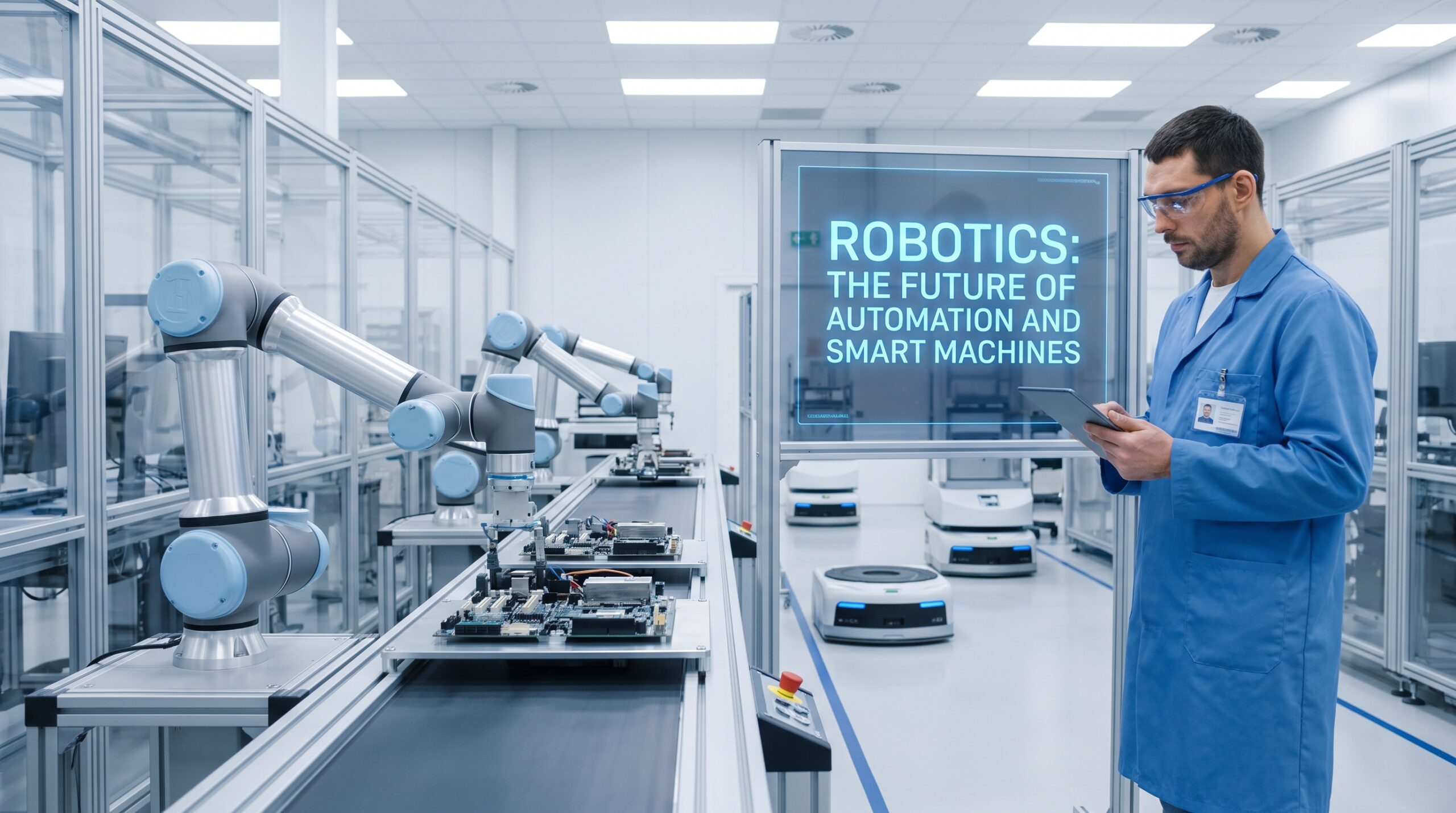
Industrial robots are the heavy lifters of the global manufacturing sector. Typically consisting of articulated mechanical arms mounted to fixed pedestals or linear tracks, these machines are engineered for extreme speed, repeatability, and endurance. They operate in controlled environments, executing tasks such as spot welding, laser cutting, heavy palletization, and high-speed pick-and-place assembly. They are classified by their kinematic structures, which include SCARA (Selective Compliance Assembly Robot Arm) configurations for rapid planar work, delta robots characterized by parallel overhead linkages for ultra-fast packaging, and multi-axis articulated arms that offer up to six or seven degrees of freedom, mimicking the versatility of a human torso, shoulder, elbow, and wrist.
Service Robots
Unlike their industrial counterparts, service robots operate primarily outside structured factory environments to perform useful tasks for humans or domestic operations. This category includes domestic service robots, such as autonomous vacuum cleaners and lawnmowers, which navigate residential layouts using basic obstacle avoidance and mapping algorithms. It also includes commercial service robots deployed in hospitality, retail, and logistics, such as robotic waiters that transport food trays in restaurants, autonomous inventory scanners that patrol supermarket aisles, and mobile delivery units that navigate hotel corridors to deliver fresh linens directly to guest rooms.
Humanoid Robots
Humanoid robots represent one of the most complex engineering challenges in robotics technology, featuring physical form factors that mimic the human anatomy, including a head, torso, two arms, and two legs. The primary rationale for developing humanoid robots is that our entire global infrastructure—from the height of door handles and staircases to the layout of factories, vehicles, and tools—has been explicitly engineered around the human body. By creating bipedal, anthropomorphic smart machines, engineers can deploy versatile workers capable of stepping directly into existing human roles without requiring costly structural modifications to the workspace. These robots require highly advanced dynamic balancing algorithms, real-time center-of-mass calculations, and complex multi-degree-of-freedom coordination to walk, climb stairs, and manipulate tools fluidly.
Medical Robots
Medical robots have revolutionized clinical procedures by introducing unparalleled precision, scale reduction, and stereoscopic visualization to healthcare. The most prominent examples are surgical robotic systems, which allow human surgeons to sit at ergonomic consoles and manipulate microscopic surgical instruments inside a patient’s body via teleoperation. These systems filter out natural hand tremors and scale down the surgeon’s physical hand movements, turning a one-inch movement at the console into a one-millimeter shift inside the operating room. This category also includes autonomous radiation therapy systems that target tumors with pinpoint accuracy, physical rehabilitation exoskeletons that assist stroke survivors in relearning how to walk, and automated pharmaceutical dispensing systems that eliminate human error in hospital pharmacies.
Agricultural Robots
Agricultural robots, frequently referred to as “agribots,” are designed to address critical labor shortages, optimize crop yields, and drive sustainable farming practices. These machines operate across rugged, unpredictable outdoor fields and orchards. Specialized agribots use advanced computer vision to inspect crops, identify weeds with extreme accuracy, and eliminate them using precise micro-doses of herbicides or targeted thermal lasers, dramatically reducing overall chemical usage. Other agricultural machines include autonomous tractors guided by high-precision GPS, robotic fruit-pickers equipped with soft tactile grippers that can pluck delicate strawberries or apples without bruising them, and automated milking systems that manage dairy cow extraction seamlessly.
Educational Robots
Educational robots serve as interactive, tangible gateways for students to master the principles of Science, Technology, Engineering, and Mathematics (STEM). Rather than studying abstract lines of software code on a flat monitor, students program physical educational robots to navigate mazes, interact with lights, or engage in classroom engineering competitions. These platforms range from modular, block-based programming kits designed for elementary school children to highly sophisticated, open-source robotic platforms used by university researchers to test advanced control theories, slam mapping, and artificial intelligence integration.
Military Robots
Military robots are deployed to enhance situational awareness, extend tactical capabilities, and remove human personnel from the direct line of fire. These include unmanned aerial vehicles (UAVs) utilized for reconnaissance and targeted tactical operations, unmanned ground vehicles (UGVs) designed to transport heavy infantry gear across treacherous mountain terrain, and compact, rugged bomb disposal track-bots equipped with multi-jointed arms and real-time video feeds to safely disrupt Improvised Explosive Devices (IEDs) from a secure distance. The development of military robotics is strictly regulated by rigorous defense testing protocols and complex international legal frameworks regarding operational autonomy.
Space Exploration Robots
Space exploration robots are engineered to survive the most hostile, unforgiving environments known to science, operating across extreme thermal variances, intense radiation fields, and deep vacuums where human survival is currently impossible. This elite category includes planetary rovers, such as NASA’s Curiosity and Perseverance on Mars, which navigate rocky terrain autonomously, drill into extraterrestrial rock faces, and analyze soil chemistry using integrated onboard laboratories. It also includes deep-space probes, autonomous orbital docking mechanisms, and experimental robotic arms mounted outside the International Space Station, which execute exterior maintenance tasks while controlled by astronauts inside or ground controllers on Earth.
Autonomous Robots
Autonomous robots are defined by their complete self-reliance, operating continuously without real-time human intervention or remote control tethering. These smart machines rely on an advanced loop of perception, mapping, localization, and real-time path planning. An autonomous robot must build a map of its surroundings using its sensory array while simultaneously tracking its own precise position within that map—a computational challenge known as Simultaneous Localization and Mapping (SLAM). From autonomous delivery drones navigating cross-winds to subterranean mining robots tunneling deep beneath the earth’s surface, these systems make instantaneous operational decisions based entirely on their internal cognitive architecture.
Collaborative Robots
Collaborative robots, universally known as “cobots,” represent a radical departure from traditional industrial robots. While classic industrial robots must be enclosed within heavy safety cages or optical light curtains because their high-speed, unyielding motions would be fatal to a human worker, cobots are explicitly engineered to work safely alongside humans in shared workspaces. Cobots are outfitted with sensitive force-torque sensors at every joint; if a cobot makes even minor physical contact with a human coworker’s arm, it instantly halts all motion within milliseconds to prevent injury. Cobots are lightweight, easy to reprogram via manual guidance (physically moving the arm to teach it a path), and are widely deployed to assist humans with tedious, repetitive sub-assemblies, quality testing, and hand-off packaging.
To provide a clear structural overview of how these diverse classifications compare across key metrics, the following table details their primary operational environments, typical autonomy levels, and core engineering focus areas:
| Robot Classification | Primary Environment | Autonomy Level | Core Engineering Focus | Primary Use Case |
|---|---|---|---|---|
| Industrial Robots | Structured Factories | Low to Medium (Pre-programmed) | Speed, Precision, Structural Rigidity | Automotive Welding & Assembly |
| Service Robots | Commercial & Domestic Spaces | Medium to High | Obstacle Avoidance, Human Interaction | Vacuuming, Hospitality Delivery |
| Humanoid Robots | Human-Centric Spaces | High | Bipedal Locomotion, Dynamic Balance | General Labor, Tool Manipulation |
| Medical Robots | Hospitals & Clinics | Low (Teleoperated) to Medium | Precision Scaling, Tremor Filtering | Minimally Invasive Surgery |
| Agricultural Robots | Unstructured Farms & Fields | High | Computer Vision, Soft Tactile Gripping | Weeding, Harvesting, Yield Mapping |
| Educational Robots | Classrooms & Labs | Low to Medium | Modular Hardware, Accessible Code | STEM Learning, Prototyping |
| Military Robots | Tactical Zones & Defense Fields | Medium to High (Human-in-the-loop) | Ruggedization, Encrypted Comms | Bomb Disposal, Aerial Reconnaissance |
| Space Exploration Robots | Extraterrestrial Bodies | High (Due to signal latency) | Radiation Hardening, Thermal Control | Planetary Surface Analysis |
| Autonomous Robots | Varies (Urban, Subterranean) | Complete (100% Autonomous) | SLAM Mapping, Cognitive Pathing | Last-Mile Logistics, Mapping |
| Collaborative Robots (Cobots) | Shared Human Workspaces | Medium | Force-Torque Feedback, Soft Structures | Shared Assembly, Quality Inspection |
Robot Programming
The execution of physical behavior in robotics technology requires translating abstract human objectives into explicit, real-time electronic instructions. Robot programming has evolved through several distinct paradigms, balancing the ease of development with the necessity for highly reliable, deterministic control. The earliest and most straightforward approach is teach-pendant programming, where a technician utilizes a handheld terminal to manually drive an industrial robot arm through a sequence of physical points in space. The robot stores these coordinates in memory and repeats the exact spatial path indefinitely. While highly reliable for simple tasks, this method requires halting production lines during programming, incurring costly downtime.
To overcome this limitation, the industry transitioned to offline programming and advanced simulation environments. Software engineers build highly detailed digital twins of the entire factory floor, allowing them to write, test, and optimize complex robotic code without interrupting physical operations. These systems generate low-level joint instructions using specialized languages or unified frameworks like ROS (Robot Operating System). ROS is not a physical operating system but an open-source, flexible middleware architecture that provides hardware abstraction, low-level device drivers, message-passing protocols, and package management. Through ROS, developers can easily integrate pre-built packages for complex tasks such as navigation, kinematics solvers, and sensor fusion, significantly accelerating the deployment of advanced robotics applications across diverse hardware configurations.
Artificial Intelligence in Robotics
The integration of artificial intelligence into robotics technology marks the transition from deaf, blind machines into true smart machines capable of operational reasoning and contextual understanding. Historically, traditional automation software operated on a strict, linear deterministic logic: “If sensor A reads X, execute movement Y.” While highly effective in rigid, unchanging factory environments, this approach fails utterly when confronted with the chaotic, unpredictable nature of the real world. Artificial intelligence provides the algorithmic cognitive framework required to handle uncertainty, allowing robots to process complex, multi-modal environments and adapt their workflows dynamically without throwing critical system errors.
AI transforms robotics from a mechanical execution tool into an active collaborator. By utilizing probabilistic models, reasoning graphs, and intent-prediction frameworks, an AI-enabled robot can anticipate human actions, plan multi-stage operations under resource constraints, and dynamically re-route its physical pathing when confronted with unexpected obstacles. This cognitive layer allows robots to prioritize safety, calculate optimal operational efficiency, and perform high-level problem solving, such as determining how to untangle a cluster of cords or identifying structural anomalies in a pipeline that were not explicitly predefined in its initial source code.
Machine Learning in Smart Machines
Within the broader architecture of robotic AI, machine learning serves as the primary engine for experiential growth and physical adaptation. Through machine learning, smart machines do not require explicitly coded rules for every potential real-world scenario; instead, they extract behavioral insights and operational optimization directly from data. A primary methodology deployed in modern robotics engineering is reinforcement learning (RL). In an RL framework, a robot is placed in a simulated or physical environment and given a high-level goal (such as manipulating a key into a lock) along with a mathematical reward function. The robot’s control policy attempts millions of random movements, gradually learning which subtle actuator adjustments maximize the positive reward. Over time, the robot independently discovers optimal trajectories and fluid physics balances that would be virtually impossible for a human engineer to program manually.
Furthermore, machine learning facilitates predictive maintenance paradigms within smart machines. By continuously monitoring real-time streams of sensory data—such as micro-vibrations in an industrial arm’s third joint, fluctuating electrical current draws in a servo motor, or minor thermal spikes within an electronic speed controller—machine learning models can accurately predict when a mechanical component is approaching structural failure. This allows the system to alert operators or autonomously schedule maintenance before a catastrophic breakdown occurs, drastically reducing operational downtime and saving millions of dollars in industrial repair costs.
Computer Vision in Robotics
Computer vision is the technological bridge that grants smart machines the ability to visually perceive, interpret, and understand the physical layout of the three-dimensional universe. Without computer vision, a robot is physically blind, unable to verify if an object is correctly positioned or if a human has stepped into its path. Utilizing advanced image acquisition hardware coupled with deep convolutional neural networks (CNNs) and transformer models, computer vision systems convert raw arrays of pixels and depth measurements into meaningful semantic maps. These systems perform real-time object classification, localized tracking, and precise spatial mapping, allowing a robotic entity to discern the exact boundaries of its environment.
A critical application of computer vision in robotics engineering is 6D Pose Estimation, which calculates both the exact 3D translation (X, Y, Z coordinates) and the 3D rotation (roll, pitch, yaw) of an object relative to the robot’s gripper. This capability is vital for bin-picking applications, where thousands of randomly oriented, overlapping mechanical parts must be individually identified, grabbed, and oriented correctly on an assembly line. Additionally, computer vision drives visual servoing—a control methodology where the real-time visual feedback from an arm-mounted camera is fed directly into the low-level motor controllers, adjusting the path dynamically as the robot closes in on a moving target, ensuring flawless precision even if the target object is shifted or vibrating.
“`
Robotics in Healthcare
The penetration of robotics technology into the healthcare ecosystem is transforming clinical outcomes, surgical methodologies, and patient rehabilitation protocols. Unlike industrial applications that prioritize high speed and massive force, medical robotics engineering prioritizes ultra-fine precision, sub-millimeter motion scaling, tremor filtering, and high-fidelity sensory feedback. These systems do not replace medical professionals; instead, they function as technological force multipliers that expand human capabilities, enabling surgeons and clinical staff to perform operations with structural access and steady-handed accuracy that exceed natural human biological constraints.
Surgical robotic platforms represent the pinnacle of this field. Operating via sophisticated teleoperation consoles, a surgeon manipulates master controllers that translate macroscopic hand movements into microscopic, scaled-down motions of robotic wrists inside the patient’s body. These minimally invasive systems require only tiny incisions, drastically lowering intraoperative blood loss, reducing post-operative infection risks, and cutting patient recovery times from weeks to days. Beyond the operating theater, robotics applications in healthcare encompass autonomous radiation therapy delivery systems, bionic prosthetics that interpret neural signals, and robotic exoskeletons designed to physically rehabilitate patients recovering from stroke or spinal cord trauma by retraining neuromuscular pathways through precise, repeatable physical motion loops.
Robotics in Agriculture
Global agriculture faces systemic pressures from rapid population growth, climate variability, and severe labor shortages. Agricultural robots, or agribots, are emerging as critical infrastructure tools to guarantee global food security by introducing precision automation technology into open fields, orchards, and indoor hydroponic facilities. Traditional farming relies heavily on broad-spectrum applications of chemicals and massive mechanical harvesters that treat entire fields uniformly. In contrast, smart machines driven by advanced artificial intelligence treat crops at an individual, plant-by-plant level, optimizing resource distribution and maximizing crop yield while minimizing environmental footprints.
Autonomous agricultural platforms navigate rough, unstructured fields using specialized GPS and real-time kinematic (RTK) positioning. These machines utilize computer vision networks to inspect crops, identify weeds, and instantly eliminate them using micro-targeted thermal lasers or exact chemical micro-doses, reducing global herbicide reliance by up to 90%. Robotic harvesting systems present complex engineering challenges, requiring soft, tactile end-effectors integrated with depth-sensing vision to gently pluck delicate fruits and vegetables—such as tomatoes, strawberries, and apples—without bruising the organic tissue. By automating labor-intensive tasks like picking, sorting, weeding, and continuous phenotypic crop monitoring, robotics transforms modern agriculture into a highly predictable, data-driven system.
Robotics in Education
The academic integration of robotics technology plays an essential role in preparing future generations for an increasingly automated global economy. Educational robots serve as physical, interactive bridges that convert abstract computational concepts and mathematical formulas into tangible, real-world outcomes. When a student writes a block of code, the result is no longer just static text on a screen; it becomes a physical action—a robot successfully navigating a labyrinth, identifying a specific color, or manipulating a physical object. This immediate physical feedback loop enhances spatial reasoning, deepens structural problem-solving abilities, and builds computational thinking skills.
Educational robotics curricula scale across all academic levels. In early childhood and elementary education, modular, block-programmed mobile robots introduce basic logical ordering, conditional statements, and structural loops without requiring complex syntax memorization. In secondary and higher education, student teams build and program advanced robotic systems using professional languages like Python and C++, integrating complex sensory arrays and kinematic configurations. These physical platforms prepare students for modern robotics careers, cultivating essential skills in systems engineering, software development, electronic circuit design, and collaborative teamwork.
Robotics in Transportation
Self-Driving Vehicles
The intersection of robotics technology, artificial intelligence, and traditional transportation infrastructure has driven the development of self-driving and fully autonomous vehicles. A self-driving vehicle is fundamentally a highly complex mobile robot designed to safely navigate dynamic, non-deterministic urban environments at high speeds. These smart machines convert traditional automotive transport into closed-loop robotic control systems, relying on sensor fusion arrays that combine long-range LiDAR, radar, ultrasonic sensors, and high-definition optical cameras to maintain a continuous, 360-degree awareness of their surroundings.
The internal processing architecture of an autonomous vehicle separates navigation into four distinct computational layers: perception, localization, planning, and control. The perception layer classifies surrounding entities, such as pedestrians, cyclists, and moving vehicles. The localization layer determines the vehicle’s position within a centimeter-accurate map using global satellite networks and visual odometry. The planning layer utilizes machine learning models to predict the future intent of nearby actors and calculate safe trajectory paths. Finally, the control layer translates these trajectories into precise mechanical steering, acceleration, and braking commands. Beyond individual consumer vehicles, autonomous transportation technology is redefining commercial logistics through self-driving freight trucks, platooning transport networks, and urban robo-taxi fleets, optimizing global fuel efficiency and mitigating accidents caused by human error.
Robotics in Construction
The construction sector has historically been slow to adopt digital automation due to the unstructured, hazardous, and constantly changing nature of building sites. However, modern robotics engineering is overcoming these environmental hurdles, deploying specialized smart machines to automate repetitive, physically punishing, and high-risk structural workflows. The introduction of robotics into construction sites addresses critical industry challenges, including systemic labor deficits, rising material costs, and stringent workplace safety regulations. By shifting heavy physical labor to automated systems, construction companies can accelerate project timelines while maintaining high spatial accuracy.
Prominent robotics applications in construction include large-scale 3D concrete printing systems, autonomous bricklaying robots, and automated structural welding platforms. 3D printing robots use massive gantry systems or multi-axis articulated arms to extrude specialized concrete mixtures layer-by-layer, creating complex architectural structures directly from CAD models with zero mold waste. On commercial building sites, autonomous layout robots navigate concrete slabs to precisely print blueprints, wall boundaries, and utility pathways using inkjet markers, reducing layout errors from inches to fractions of a millimeter. Furthermore, autonomous demolition robots, equipped with hydraulic breakers and controlled via safe remote telemetry, dismantle hazardous structures without exposing human operators to falling debris or toxic dust.
Robotics in Retail
The retail landscape is undergoing a massive structural reorganization, powered by the deployment of robotics technology across both consumer-facing spaces and behind-the-scenes logistical fulfillment centers. In the modern e-commerce paradigm, the speed of product sortation, order picking, and last-mile distribution determines commercial viability. Robotics systems optimize this pipeline by converting traditional warehouses into highly coordinated automated storage and retrieval systems (ASRS), where fleets of autonomous mobile robots (AMRs) lift and transport entire inventory shelving units directly to human packing stations, eliminating hours of manual walking time.
On the retail storefront floor, service robots are shifting consumer interactions and store management workflows. Autonomous inventory scanning robots patrol supermarket aisles, utilizing high-resolution computer vision and RFID sensors to identify misplaced items, detect out-of-stock products, and verify price tag accuracy in real-time. This structural data is uploaded instantly to supply chain management databases, triggering automated reorders. In hospitality and consumer service roles, interactive robotic kiosks guide customers through retail layouts, answer product inquiries, and manage point-of-sale transactions, creating streamlined retail ecosystems that optimize operational efficiency and enhance customer satisfaction.
Robotics in Defense and Security
Modern defense and public security paradigms increasingly rely on robotics technology to mitigate human risk, enhance situational awareness, and provide precise operational capabilities in high-stakes environments. The deployment of smart machines in defense applications focuses on gathering actionable intelligence, clearing physical hazards, and securing borders without exposing human personnel to immediate danger. These robotic systems are designed with high degrees of ruggedization, featuring military-grade electromagnetic shielding, encrypted communications telemetry, and robust mechanical structures capable of operating in extreme environmental conditions.
Unmanned Aerial Vehicles (UAVs) dominate modern defense recon, providing long-endurance aerial surveillance, thermal mapping, and tactical monitoring over hostile territory. On the ground, Unmanned Ground Vehicles (UGVs) perform critical roles such as explosive ordnance disposal (EOD), route clearance, and forward supply transport across rugged mountain terrains. These EOD robots use precise multi-jointed arms, high-definition cameras, and specialized sensory arrays to disarm or detonate improvised explosive devices from safe, standoff distances. In public security contexts, autonomous security robots patrol critical infrastructure facilities, airports, and commercial borders, utilizing computer vision, facial recognition, and thermal anomaly detection to flag security breaches and alert human monitoring teams instantly.
Robotics in Smart Homes
The vision of the smart home of the future relies on the seamless integration of domestic service robots that manage personal living spaces, enhance household energy efficiency, and support independent living for elderly or mobility-impaired individuals. Early domestic robotics technology was defined by simple, single-purpose devices like basic vacuum cleaners that relied on random bumping algorithms to cover floors. Today, the intersection of spatial computing, machine learning, and advanced mechanical design has delivered intelligent domestic smart machines that build persistent semantic maps of residential layouts, adapt to daily household routines, and communicate with broader Internet of Things (IoT) ecosystems.
Modern domestic robotics applications include advanced robotic vacuum and mopping systems that use built-in LiDAR and computer vision to identify and avoid temporary obstacles like pet waste, loose cables, or discarded footwear. Robotic lawnmowers maintain residential green spaces autonomously, navigating without the need for physical perimeter wires by utilizing RTK GPS and visual boundaries. Looking forward, the domestic market is driving toward multi-functional robotic assistants equipped with articulating arms capable of performing complex household chores, including loading dishwashers, sorting laundry, clearing tables, and providing medication reminders and physical support to vulnerable residents, redefining the structural nature of home care.
Human-Robot Interaction
As smart machines transition out of isolated industrial cages and into shared human workspaces, public spaces, and domestic environments, the field of Human-Robot Interaction (HRI) has become a vital domain of robotics engineering. HRI is an interdisciplinary field dedicated to understanding, designing, and evaluating robotic systems intended for direct or collaborative use alongside human beings. The primary goal of HRI is to ensure that interactions between humans and robots are intuitive, safe, efficient, and psychologically comfortable, minimizing the cognitive load and physical risks associated with operating complex automated machinery.
Effective human-robot interaction relies on multi-modal communication interfaces that transcend traditional keyboard inputs or technical programming terminals. Modern HRI structures incorporate natural language processing (NLP) to allow verbal commanding, computer vision models that interpret human gestures and body language, and tactile force-feedback systems that enable physical guidance. For collaborative robots (cobots) working on factory floors, HRI design focuses on predictive safety, where the robot reads human movement trajectories and adjusts its operational speed dynamically to prevent physical contact. In social and service robotics applications, HRI explores the impact of facial expressions, eye-gaze tracking, and behavioral responses on human trust and acceptance, ensuring that robots function as helpful companions rather than intimidating mechanical entities.
To summarize how robotics technology maps across these diverse industry verticals, the following comprehensive applications table highlights the core robotic systems used, their technological enablers, and their real-world impact:
| Industry Sector | Core Robotic Systems | Key Technological Enablers | Primary Operational Benefit |
|---|---|---|---|
| Manufacturing | Articulated Arms, SCARA, Delta Robots | 6D Pose Estimation, High-Speed Servos | Elimination of material waste, absolute cycle consistency |
| Healthcare | DaVinci Surgical Systems, Exoskeletons | Motion Scaling, Sub-millimeter Tremor Filtering | Minimally invasive operations, rapid patient recovery |
| Agriculture | Autonomous Weeding Bots, Soft Gripper Pickers | RTK GPS, Deep Learning Weed Classification | Massive reduction in herbicide usage, reliable harvesting |
| Education | Modular STEM Kits, ROS Research Platforms | Block Coding, Open-Source Middleware (ROS) | Tangible execution of abstract programming logic |
| Transportation | Autonomous Semis, Robo-taxis, Delivery Bots | Sensor Fusion (LiDAR, Radar, Vision Cameras) | Mitigation of human-error accidents, logistics optimization |
| Construction | 3D Concrete Printers, Layout Bots | Gantry Motion Controllers, CAD Integration | Rapid architectural execution, zero concrete mold waste |
| Retail | AMRs, Inventory Patrollers, Kiosk Bots | Computer Vision Shelf Scanning, RFID Fusion | Real-time inventory tracking, rapid logistics fulfillment |
| Defense & Security | EOD Track-Bots, Recon UAVs, Border Patrollers | Encrypted Telemetry, Radiation/Thermal Sensing | Removal of human personnel from high-risk tactical zones |
| Smart Homes | LiDAR Vacuums, Visual Boundary Lawnmowers | Simultaneous Localization and Mapping (SLAM) | Automation of domestic labor, support for independent living |
Benefits of Robotics
The systematic deployment of robotics technology across the global economy provides structural advantages that fundamentally reshape industrial productivity, scientific exploration, and human quality of life. By offloading deterministic, high-precision, and hazardous tasks to smart machines, human civilization can achieve scales of operation and levels of efficiency that were historically impossible. The primary benefits of modern robotics automation include:
- Unparalleled Precision and Consistency: Industrial robots execute spatial paths with sub-millimeter repeatability, ensuring that the millionth manufactured part is structurally identical to the first, eliminating human fatigue variance.
- Enhanced Workplace Safety: By deploying robots into high-risk roles—such as chemical processing, deep underground mining, underwater structural repairs, and bomb disposal—societies directly reduce workplace injuries and fatalities.
- Continuous Operational Availability: Smart machines do not require shifts, sleep, or personal breaks; they can operate continuously under 24/7 production schedules, maximizing capital asset utilization and accelerating throughput.
- Optimization of Resource and Material Use: Advanced robotic systems optimize material consumption, reducing scrap metal, excess paint deposition, and chemical applications through exact algorithmic control.
- Capability to Operate in Hostile Environments: Robotics technology unlocks domains inaccessible to biological life, enabling advanced planetary exploration, deep ocean scientific research, and structural monitoring inside nuclear containment vessels.
- Surgical Precision and Minimally Invasive Interventions: Medical robots scale down human movements and eliminate natural physiological tremors, leading to smaller surgical incisions, less patient trauma, and reduced hospital stays.
- Alleviation of Repetitive, Debilitating Human Labor: Automation lifts human workers above mundane, ergonomically destructive tasks, allowing them to focus on intellectual, creative, and supervisory operational roles.
Challenges and Limitations of Robotics
Safety Issues
Despite the immense technical advantages of robotics technology, the integration of heavy, fast-moving autonomous machines into human spaces introduces significant safety risks. Traditional industrial robots operate with immense kinetic energy and zero inherent awareness of biological tissue; a human stepping into an active industrial cell risk catastrophic crush injuries or death. While modern collaborative robots (cobots) incorporate force-torque feedback loop limiters to mitigate these dangers, the challenge of guaranteeing absolute safety increases exponentially as robots enter unstructured, unpredictable public environments like urban streets, retail stores, and private homes.
Sensory and algorithmic failures present a persistent safety concern for autonomous systems. A self-driving vehicle or delivery robot navigating through heavy rain, blinding snow, or dense smoke may experience sensor degradation, misclassifying structural hazards or failing to detect pedestrians due to occlusion or edge-case software errors. Ensuring that smart machines possess deterministic fail-safe states—where a hardware or software glitch triggers an immediate, controlled shutdown without causing secondary accidents—requires rigorous testing protocols, multi-channel hardware redundancy, and continuous real-time system monitoring across both hardware and software layers.
Ethical Concerns
The rapid rise of robotics and artificial intelligence introduces complex ethical dilemmas that society must address to ensure technology serves the collective human good. A primary ethical concern involves accountability in autonomous systems: if an autonomous vehicle, robotic surgeon, or military drone executes an action that results in physical property damage or loss of life, where does the legal and moral liability reside? Does it fall upon the software engineer who trained the neural network, the hardware manufacturer, the operational supervisor, or the corporate entity deploying the machine? Current legal frameworks are ill-equipped to manage the blurred lines of accountability created by non-deterministic, learning machines.
Furthermore, the development of autonomous weapon systems (AWS) in modern defense frameworks presents a profound ethical challenge for global international humanitarian law. Allowing a machine to autonomously process sensor data, identify human targets, and execute lethal force without direct human intervention removes human empathy and moral judgment from the battlefield. Other ethical dimensions encompass data privacy concerns—as domestic and service robots continuously record high-definition visual, audio, and spatial data within private residences and commercial spaces—and the potential amplification of algorithmic biases when machine learning models are trained on unvetted or unrepresentative operational datasets.
Robotics and Employment
The Future Workplace
The relationship between robotics technology and the global labor market is undergoing a profound structural evolution. Historically, waves of industrial automation sparked widespread public anxiety regarding the wholesale elimination of human employment. While robotics automation technology inevitably disrupts specific job classifications—particularly those involving repetitive, manual material handling, basic data collection, and routine assembly operations—historical data demonstrates that technology acts primarily as a job transformer rather than a pure job destroyer. The widespread deployment of smart machines shifts the demand curves of the global economy, eliminating low-skilled, physically grueling positions while simultaneously creating an entirely new ecosystem of highly technical, intellectually engaging professions.
The future workplace will be characterized by tight human-robot collaboration, where humans and smart machines operate as complementary partners within integrated workflows. Robots excel at executing high-speed, high-precision, data-heavy, and physically punishing tasks, while humans maintain an absolute competitive advantage in creative problem solving, high-level strategic planning, emotional intelligence, structural empathy, and complex contextual reasoning. This synthesis elevates the human worker’s role from a source of raw mechanical labor to a system administrator, process optimizer, and ethical supervisor. Economic adaptation to this new paradigm requires aggressive institutional investment in educational upskilling, corporate technical retraining programs, and fluid educational pipelines designed to equip workforce participants with the specialized engineering and programming competencies required to thrive alongside intelligent automation systems.
Robotics Engineering Careers
The explosive expansion of automated systems across all major industrial sectors has generated a massive global demand for highly skilled professionals specialized in robotics engineering and smart machine management. Robotics engineering is an elite, multi-disciplinary career path that sits at the intersection of mechanical design, electronic systems fabrication, computer science, and algorithmic artificial intelligence. Professionals in this domain do not work in isolation; they design, deploy, and optimize complex, cyber-physical systems that require an exhaustive understanding of how digital software instructions interact with physical matter in real-time environments.
The professional landscape within robotics technology offers a diverse array of specialized career opportunities, each focusing on a distinct layer of the automation stack. To provide a clear overview of the career options available to aspiring engineering professionals, the following comprehensive table details primary professional roles, core operational responsibilities, and typical deployment industries:
| Professional Role | Core Operational Responsibilities | Primary Deployment Industries |
|---|---|---|
| Robotics Software Engineer | Develops navigation algorithms, localization modules (SLAM), and low-level device drivers using ROS, C++, and Python. | Autonomous Vehicles, Aerospace, Logistics |
| Robotics Controls Engineer | Designs closed-loop feedback systems, models system dynamics, and implements PID and Model Predictive Control (MPC) architectures. | Industrial Automation, Manufacturing, Defense |
| Computer Vision Engineer | Develops image processing pipelines, deep learning CNN models for object detection, and 6D pose estimation systems. | E-commerce, Medical Systems, Autonomous Drones |
| Mechanical Design Engineer | Engineers physical robot structures, joint linkages, end-effectors, and chassis using CAD, finite element analysis, and material science. | Heavy Industry, Consumer Robotics, Prosthetics |
| Automation Systems Integrator | Deploys, wires, and programs industrial robots on factory floors, connecting them with PLCs and factory execution networks. | Automotive, Food & Beverage, Manufacturing |
| Robotics Test Engineer | Designs rigorous hardware-in-the-loop (HIL) testing protocols, structural stress tests, and safety compliance validation profiles. | Defense, Aerospace, Consumer Electronics |
Skills Required for Robotics Careers
Thriving within the highly competitive domain of robotics engineering requires a robust, dual-faceted skill set that blends deep technical proficiency with strong foundational cognitive and collaborative competencies. Because a robot is a highly complex system composed of interdependent physical and digital layers, a successful engineer cannot afford to be siloed within a single discipline. A software engineer must understand the torque limits and physical inertia of the mechanical arm their code controls, while a mechanical designer must comprehend how sensor bandwidth and sampling frequencies affect the stability of the control algorithms. The core competencies required for modern robotics careers include:
- Advanced Software Architecture and Programming: Mastery of low-level and high-level programming languages capable of real-time execution, hardware interaction, and efficient memory management.
- Systems Dynamics and Kinematic Modeling: Theoretical understanding of forward kinematics, inverse kinematics, and spatial coordinate transformations required to map robot movements.
- Embedded Systems and Electronics Design: Proficiency in microcontrollers, digital signal processors, PCB layout architecture, communication protocols (I2C, SPI, CAN bus), and electrical diagnostic testing.
- Sensor Fusion and Signal Processing: Capability to ingest, filter, and synthesize noisy data streams from multiple disparate sensors (LiDAR, IMUs, Cameras) into a clean, actionable environmental map.
- Mathematical Fluency: Deep operational knowledge of linear algebra, calculus, probability, and numerical optimization methodologies that form the foundation of all robotic intelligence and control.
- Cross-Disciplinary Collaborative Communication: Ability to communicate complex technical concepts clearly across diverse engineering teams, bridging the gap between hardware fabricators and software developers.
- Creative Analytical Problem Solving: Resilience and ingenuity required to debug erratic physical behaviors caused by the unpredictable interaction of software bugs with real-world physics anomalies.
Programming Languages Used in Robotics
The choice of software development languages in robotics engineering is dictated by the specific layer of the system architecture being targeted, balancing the need for raw computational execution speed and low-level hardware access with the demand for rapid prototyping and high-level AI experimentation. The two absolute pillars of the modern robotics ecosystem are C++ and Python. C++ is the undisputed industry standard for low-level control, embedded systems development, and real-time processing applications. Because C++ compiles directly to native machine code and provides manual memory management, engineers use it to write time-critical execution blocks—such as high-frequency motor control loops, real-time SLAM mapping, and core computer vision algorithms—where a latency spike of a single millisecond could cause physical system instability.
Conversely, Python has emerged as the dominant language for high-level robotics development, artificial intelligence experimentation, and machine learning model training. Python’s clean syntax, vast library ecosystem, and rapid development cycles make it the ideal platform for implementing deep neural networks (using frameworks like PyTorch and TensorFlow), orchestrating high-level pathfinding logic, and writing test scripts within the Robot Operating System (ROS) environment. Beyond these two pillars, specialized roles leverage languages such as MATLAB for algorithmic simulation and control loop validation, C for bare-metal microcontroller firmware optimization, and structured IEC 61131-3 languages (such as Structured Text or Ladder Logic) for programming programmable logic controllers (PLCs) that coordinate industrial automation cells.
Mathematics for Robotics
Mathematics is the universal language of robotics technology; without it, a smart machine cannot calculate its own spatial position, determine the force required to lift an object, or interpret the geometrical layout of its environment. Every physical movement a robot executes is driven by complex underlying mathematical equations. The foundational pillar of robotics mathematics is linear algebra. Engineers utilize vectors, coordinate frames, and homogeneous transformation matrices to model the position and orientation of a robot’s links and joints in three-dimensional space. To calculate where a robot’s end-effector is located based on its joint angles, engineers use forward kinematics equations; conversely, to determine the exact joint angles required to move a gripper to a specific point in space, they must solve highly complex inverse kinematics equations, which often involve non-linear trigonometric configurations.
The mathematical representation of a robot’s spatial orientation and transformation matrix is typically formulated as a homogeneous transformation matrix $T$, which maps a point from a local coordinate frame to a global frame. This matrix combines a $3 \times 3$ rotation matrix $R$ with a $3 \times 1$ translation vector $P$ within a unified $4 \times 4$ framework:
$$T = \begin{bmatrix} R & P \\ 0 & 1 \end{bmatrix}$$
Beyond spatial geometry, calculus and systems dynamics are critical for modeling how a robot interacts with physical forces over time. Differential calculus allows engineers to calculate velocities and accelerations, utilizing the Jacobian matrix to map joint velocities directly to end-effector velocities in Cartesian space. Integral calculus and differential equations form the basis of control theory, enabling the design of stable feedback loops that prevent systems from oscillating wildly under variable loads. Furthermore, probability theory and Bayesian statistics are essential for autonomous navigation, powering state-estimation algorithms like the Kalman Filter and Particle Filters, which allow a robot to calculate its most likely position despite operating with noisy, imperfect sensory data.
Learning Roadmap for Beginners
Entering the vast, multidisciplinary landscape of robotics engineering can be highly intimidating for beginners. To build a functional, industry-ready competency in this field, aspiring engineers should follow a structured, step-by-step learning roadmap that establishes strong foundational theory before advancing to complex cyber-physical system integration. The optimal development pathway includes the following sequential phases:
- Phase 1: Master Foundational Mathematics and Programming: Establish a deep proficiency in core linear algebra (matrix multiplication, vector spaces) and calculus. Simultaneously, learn the fundamentals of Python programming, focusing on data structures, object-oriented concepts, and basic algorithmic logic.
- Phase 2: Explore Basic Electronics and Embedded Systems: Gain hands-on experience with accessible microcontroller platforms like Arduino or Raspberry Pi. Learn to read basic circuit schematics, wire breadboards, and interface with fundamental hardware components such as LEDs, ultrasonic sensors, and small servo motors.
- Phase 3: Study Robot Kinematics and Control Theory: Dive into the theoretical physics of robotics engineering. Understand forward and inverse kinematics, coordinate transformations, and the mathematical implementation of closed-loop PID controllers to smoothly regulate physical motion.
- Phase 4: Learn the Robot Operating System (ROS) and Linux: Transition to professional software toolsets. Gain comfort working within the Linux command line (Ubuntu) and master the core concepts of ROS, including nodes, topics, services, and message-passing paradigms.
- Phase 5: Integrate Computer Vision and Basic AI: Study image processing fundamentals using libraries like OpenCV. Implement basic machine learning and computer vision models to allow your robotic projects to track objects, detect faces, or classify environmental features.
- Phase 6: Build a Comprehensive Capstone Project: Synthesize all acquired skills by designing, building, and programming a complex physical or simulated robot from scratch—such as an autonomous maze-solving rover or a computer-vision-guided robotic arm—and document your engineering process in a professional portfolio.
Future Trends in Robotics
Humanoid Robots of the Future
The field of robotics technology is on the cusp of an architectural revolution, driven by the rapid maturation and commercial scaling of advanced humanoid robots. For decades, humanoid robots were confined to academic research labs or corporate tech demonstrations, characterized by slow, mechanical movements and extremely high development costs. Today, a convergence of high-torque density electric actuators, advanced lightweight composite materials, and generative artificial intelligence foundational models has accelerated humanoid development, drawing massive investments from automotive titans, tech conglomerates, and leading aerospace firms.
The humanoid robots of the future will function as versatile, general-purpose labor platforms capable of stepping directly into existing human infrastructure. Powered by embodied AI—where large multimodal models are integrated directly into physical robotic forms—these smart machines can comprehend natural language instructions, perceive their surroundings with rich semantic understanding, and execute complex, multi-stage physical tasks without requiring explicit, line-by-line programming. From managing component sub-assemblies inside automotive factories to managing domestic care workflows and exploring hazardous alien terrains, advanced humanoids will redefine human physical capability, transitioning from highly specialized single-purpose machines into flexible, adaptive cognitive partners.
AI-Powered Smart Machines
The future of automation technology will be defined by the ubiquity of AI-powered smart machines that possess complete operational autonomy, cognitive resilience, and the capacity for continuous self-directed learning. Traditional automation systems are frozen in time; their operational capabilities are entirely bounded by the software code written at the time of their deployment. Future robotic entities, by contrast, will leverage cloud-based cognitive architectures and continuous edge-computing machine learning models to dynamically upgrade their behavioral parameters based on real-world experiential data, learning and adapting every single day they operate on the job.
These advanced smart machines will utilize fleet learning paradigms, where an operational insight, edge-case recovery path, or optimized motion profile discovered by a single robot operating in a warehouse in Tokyo is instantly uploaded to the cloud and deployed to thousands of identical robotic systems operating across the globe. This creates an exponential growth loop in machine capability. AI-powered robots will seamlessly combine multi-modal sensory inputs—fusing vision, touch, audio, and environmental data—to perform advanced semantic reasoning, allowing them to collaborate safely alongside humans, navigate changing workspaces, and solve unstructured physical challenges with absolute cognitive flexibility.
Robotics and Industry 5.0
The global manufacturing paradigm is transitioning from the digital automation focus of Industry 4.0 to the human-centric, sustainable framework of Industry 5.0. While Industry 4.0 prioritized hyper-connectivity, big data, and the creation of dark, fully automated factories that sought to minimize or eliminate human presence, Industry 5.0 marks a profound philosophical return to placing human creativity, craftsmanship, and well-being at the absolute center of the production process. Robotics technology serves as the primary enabler of this paradigm shift, moving away from rigid, isolated industrial robots locked inside safety cages toward an ecosystem dominated by intelligent collaborative robots (cobots) and advanced bionic systems.
In the Industry 5.0 framework, smart machines handle the repetitive, physically exhausting, and high-risk operational burdens, while humans provide the high-level cognitive guidance, artistic customization, and ethical quality supervision. This creates a powerful operational synergy: the unyielding precision, speed, and endurance of robotics technology fuse with the critical thinking, agility, and emotional intuition of the human workforce. Industry 5.0 also places a heavy premium on sustainability, leveraging advanced robotics algorithms to optimize energy consumption, eliminate raw material waste, and support circular economy recycling initiatives through the automated disassembly of complex consumer electronics and industrial machinery.
Robotics and Smart Cities
As urban populations expand and traditional infrastructure networks face increasing strain, the integration of robotics technology into municipal frameworks is becoming essential to realize the vision of sustainable, resilient smart cities. The smart city of the future will not merely be a network of digital sensors and data dashboards; it will be a dynamic, cyber-physical environment where autonomous systems actively maintain public infrastructure, optimize urban logistics, and elevate the quality of municipal services. By embedding smart machines directly into the fabric of urban environments, cities can achieve unprecedented levels of operational efficiency and environmental sustainability.
Robotics applications within smart cities will manifest across several critical infrastructure vectors. Autonomous underground maintenance robots will continuously patrol water and sewage networks, utilizing non-destructive testing sensors to identify structural micro-cracks and seal leaks before they trigger catastrophic pipe bursts or urban flooding. Above ground, fleets of autonomous electric street sweepers and automated waste sortation rovers will manage municipal sanitation, while aerial drone networks will monitor structural concrete integrity across bridges, manage emergency response deliveries, and provide real-time traffic optimization data to city computing grids. This seamless integration of physical automation ensures that cities can minimize resource expenditure while maximizing public safety and operational resilience.
To capture the overarching technological progression driving these developments, the following table details the core technologies powering modern smart machines, alongside their technical characteristics and future development horizons:
| Core Technology | Technical Characteristics | Current Industrial Status | Future Development Horizon |
|---|---|---|---|
| Embodied AI | Fuses large multimodal transformer models directly with physical robotic control systems. | Experimental/Early Pilot Deployments | Zero-shot generalization across completely unmapped physical environments. |
| High-Torque Actuators | Utilizes high-density brushless motors coupled with strain wave or cycloidal planetary gearing. | Commercially Mature in Industrial Arms | Ultra-lightweight, compliant bio-mimetic muscles with integrated force sensing. |
| Edge SLAM | Executes real-time spatial mapping and tracking entirely on low-power onboard hardware silicon. | Widely Deployed in AMRs and Drones | Multi-agent collaborative mapping across massive dynamic city-scale layouts. |
| Soft Robotics | Constructs actuators and sensors out of highly compliant, flexible elastomeric materials. | Deployed in Specialized Food Grippers | Fully biodegradable, self-healing organic robots for medical and environmental uses. |
| Fleet Learning | Synchronizes operational data across thousands of active field units via cloud-based AI nodes. | Early Adoption in Autonomous Driving | Global, real-time cross-hardware behavioral optimization networks. |
The transformation driven by these trends is further reflected in the following strategic insights, mapping out the long-term structural changes across global industries:
- Democratization of Automation: The transition to low-code and natural language interfaces allows small and medium enterprises to deploy advanced robotics without requiring dedicated, highly expensive software engineering teams.
- Transition to Robotic-as-a-Service (RaaS): Shift from massive upfront capital expenditures to flexible, operational-expenditure subscription models, making advanced smart machines accessible to a broader array of industries.
- Rise of Biologically Inspired Kinematics: Mechanical structures are increasingly abandoning rigid Cartesian layouts in favor of quadrapedal, bipedal, and serpentine configurations that offer superior agility across rough terrains.
- Strict Regulatory Standardization: Global establishment of unified algorithmic safety, cyber-security, and data-privacy standards explicitly governing the operation of autonomous systems in public domains.
Global Robotics Market Growth
Top Industries Using Robotics
The global robotics market is experiencing an unprecedented surge in capital investment, industrial adoption, and market valuation, driven by the structural transformation of industries responding to demographic shifts, labor deficits, and the demands of e-commerce acceleration. Market intelligence reports consistently project exponential compound annual growth rates (CAGR) for the robotics sector over the coming decades, positioning automation technology as one of the primary drivers of macroeconomic productivity. This massive influx of capital fuels continuous research and development, lowering hardware costs and accelerating the migration of robotics applications out of industrial niches into mainstream commercial and consumer markets.
While the adoption of smart machines is expanding globally, several key industries represent the absolute vanguard of modern robotics technology usage. The automotive industry remains the historical and financial heavy hitter, consuming a massive percentage of all active multi-axis industrial robots globally for heavy structural framing, welding, and painting operations. Close behind is the electronics and semiconductor industry, where the microscopic scale and extreme sensitivity of modern microchip fabrication require the absolute precision, dust-free vacuum compatibility, and high-speed throughput delivered by advanced SCARA and delta robots. Additional leading sectors driving massive market adoption include global third-party logistics and e-commerce warehousing, clinical healthcare providers, and high-yield agricultural enterprises, establishing a diversified market foundation that guarantees long-term economic resilience.
Famous Robots and Their Achievements
The historical evolution and public perception of robotics technology have been deeply shaped by landmark engineering achievements embodied in specific, famous robotic platforms. These machines served as the real-world proof-of-concept milestones that demonstrated the viability of advanced control theories, mechanical architectures, and artificial intelligence integration, capturing the public imagination and inspiring generations of robotics engineering professionals. Key historical and modern robots of note include:
- Unimate (1961): The world’s very first industrial robot arm, deployed on a General Motors assembly line to perform dangerous die-casting extraction. Unimate successfully proved that automation could protect human workers from extreme thermal hazards while optimizing industrial output.
- Shakey the Robot (1969): Developed at the Stanford Research Institute, Shakey was the first mobile robot equipped with artificial intelligence. By combining computer vision, a computerized steering chassis, and advanced step-planning software, Shakey proved that physical machines could reason about their environment.
- ASIMO (2000): Created by Honda, ASIMO (Advanced Step in Innovative Mobility) represented a monumental leap forward in bipedal humanoid robotics technology. ASIMO successfully demonstrated fluid bipedal walking, stair climbing, face recognition, and dynamic balancing, serving as a vital research foundation for modern anthropomorphic robotics.
- Curiosity and Perseverance Mars Rovers (2012–Present): NASA’s elite planetary robotic laboratories navigating the Martian surface completely autonomously. These advanced rovers have traveled miles across alien terrain, drilled into extraterrestrial rock faces, and executed complex chemical analyses, expanding human scientific horizons across the solar system.
- DaVinci Surgical System (2000–Present): The absolute pioneer of teleoperated robotic surgery. The DaVinci system has enabled millions of minimally invasive surgical procedures globally, proving that robotics can scale down human movements, filter natural tremors, and radically improve clinical outcomes.
- Spot and Atlas (Boston Dynamics): Spot, the agile quadrupedal robot, and Atlas, the advanced bipedal research platform, redefined global expectations for dynamic balance, mobility, and athletic agility. Atlas executing backflips and parkour sequences proved that mechanical systems could master complex, real-time physical dynamics.
30 Interesting Facts About Robotics
- The word “robot” was first introduced to the public in 1920 by Czech writer Karel Čapek in his satirical play *R.U.R. (Rossum’s Universal Robots)*, derived from the Slavic word *robota*, which signifies forced or drudgery labor.
- The term “robotics,” referring explicitly to the scientific and engineering study of automated machines, was coined by famed science fiction author Isaac Asimov in his 1941 short story *Liar!*, where he also introduced his famous Three Laws of Robotics.
- The earliest recorded designs for a humanoid robot were drawn by Leonardo da Vinci around the year 1495, depicting a mechanical knight in armor capable of sitting up, waving its arms, and moving its jaw via an intricate system of pulleys and gears.
- The world’s first operational industrial robot, the Unimate, weighed a massive 4,000 pounds and was operated via a magnetic drum memory system that stored step-by-step physical positioning commands.
- The smallest functional micro-robots engineered by modern scientists are measured in nanometers; these nano-bots are designed to travel through the human bloodstream to deliver targeted medicine directly to cancerous cells.
- The largest operational robotic systems on Earth are the massive automated bucket-wheel excavators and autonomous container cranes utilized in ultra-scale surface mining operations and international shipping ports.
- Robots do not possess a biological sense of touch, but modern tactile sensors utilizing piezoresistive and capacitive arrays allow smart machines to detect structural pressure variances down to fractions of a gram.
- NASA’s Perseverance rover utilizes an advanced autonomous navigation system called AutoNav, which allows it to map and navigate treacherous Martian terrain much faster than human drivers relying on delayed telemetry signals.
- Robots can experience a digital version of “hallucination” when computer vision neural networks are exposed to adversarial images—subtly altered pixel patterns that cause the machine to misclassify an object completely.
- The concept of “The Uncanny Valley,” introduced by Japanese roboticist Masahiro Mori in 1970, describes the profound psychological revulsion humans experience when a robot looks almost, but not quite, perfectly human.
- The primary programming framework used in global university robotics labs and corporate research divisions is ROS (Robot Operating System), which is actually an open-source set of software libraries and tools, not a literal OS.
- Modern bipedal humanoid robots calculate their real-time balance hundreds of times per second using Zero Moment Point (ZMP) equations to ensure their center of mass always remains safely over their moving feet.
- The world’s first fully robotic restaurant opened in China, utilizing autonomous cooking stations that can precisely replicate complex stir-fry motions and robotic waiters that deliver food via floor tracks.
- Robotic skin can now be engineered from living human cells; researchers have successfully grafted biological skin equivalents onto robotic fingers to provide organic self-healing and true cellular sensing capabilities.
- Soft robotics is an expanding engineering discipline that avoids rigid metal linkages entirely, using flexible silicones and pneumatics to build machines that mimic invertebrates like octopuses and earthworms.
- The multi-axis articulated arms utilized in modern automotive painting lines operate with a mechanical repeatability of plus-or-minus 0.02 millimeters, executing paths with absolute spatial consistency.
- Industrial delta robots, characterized by three parallel mechanical arms meeting at a single overhead tool point, can execute up to 300 pick-and-place product sorting movements per minute on high-speed conveyor lines.
- The deep-sea robotic vehicle *Nereus* successfully dove to the bottom of the Mariana Trench—reaching a depth of 35,768 feet—enduring crushing hydrostatic pressures exceeding 16,000 pounds per square inch.
- Robotic limbs can now be controlled directly by a human’s thoughts; advanced brain-computer interfaces (BCIs) utilize surgically implanted electrode arrays to decode neural motor impulses into electronic joint commands.
- Collaborative robots, or cobots, use advanced torque sensors at every joint to measure external resistance; if a human coworker touches the arm with minimal force, the cobot instantly freezes to guarantee physical safety.
- A single autonomous warehouse robot operating in a modern fulfillment center can walk up to 15 miles per day, lifting and transporting inventory pods weighing over 1,000 pounds with zero operational degradation.
- Robotic fruit harvesters use specialized multi-spectral cameras to look beneath the surface of fruit, determining its exact sugar content and ripeness level before deciding whether to pick it.
- The international RoboCup competition has established a formal organizational goal to field a team of fully autonomous humanoid soccer robots capable of defeating the human World Cup champions by the year 2050.
- Advanced surgical robots can scale down a human surgeon’s physical hand movements by a ratio of 5-to-1, effortlessly turning a 5-centimeter hand adjustment at the operating console into a 1-centimeter motion inside the patient.
- Military bomb disposal robots are so highly valued by their explosive ordnance teams that soldiers frequently award their robotic units honorary military ranks, medals, and formal structural retirement ceremonies.
- Robotic milking systems have revolutionized modern dairy farming, allowing cows to walk into automated milking stalls entirely on their own schedule, guided by automated RFID ear tags and laser-guided udder washers.
- The concept of “Swarm Robotics” mimics the collective behavior of social insects like ants and bees, utilizing hundreds of simple, low-cost micro-bots that communicate locally to achieve complex macro-scale objectives.
- Advanced aerospace manufacturing leverages robotic fiber placement (AFP) machines to precisely lay down layers of carbon fiber tape, building ultra-lightweight fuselage structures for modern commercial jets.
- Robots are bound by the physics of thermal dissipation; high-performance smart machines operating in hot industrial foundries often require dedicated liquid-cooling jackets to prevent internal electronics from melting.
- The future of robotics technology is deeply linked with Industry 5.0, a global movement that rejects full human replacement, focusing instead on optimizing the collaborative partnership between human creativity and machine precision.
FAQ Section
What is the core definition of a robot?
A robot is an autonomous or semi-autonomous physical entity engineered to sense its environment, process that data through computational algorithms or artificial intelligence, and execute physical tasks using mechanical actuators. A true robot must exhibit the structural closed-loop capability to perceive, reason, and act in the physical world, which distinguishes it from virtual software programs and simple, unprogrammed mechanical machines.
What is the difference between automation and robotics?
Automation technology is a broad concept that refers to using software or machinery to execute tasks with minimal human intervention, which can be purely digital (such as email sorting software). Robotics technology is a specific physical branch of automation that requires the design and deployment of tangible, programmable machines capable of performing physical labor, moving through spatial environments, and interacting directly with matter.
How do robots see and perceive their surroundings?
Robots perceive their environment by fusing data from various specialized exteroceptive sensors. These include optical cameras for rich visual data, ultrasonic sensors for close-range distance tracking, radar for velocity detection, and advanced LiDAR systems that fire laser pulses to construct detailed three-dimensional spatial maps of the surrounding universe, which are then processed by computer vision models.
What is the Robot Operating System (ROS)?
The Robot Operating System (ROS) is not a literal operating system like Windows or Linux; rather, it is a highly flexible, open-source middleware framework designed for robotics engineering. ROS provides a collection of software libraries, hardware abstraction layers, device drivers, and message-passing protocols that allow developers to build, test, and share complex robotic applications across diverse hardware platforms.
What are collaborative robots, or cobots?
Collaborative robots, universally known as cobots, are specialized robots engineered to work safely alongside human coworkers in shared spaces. Unlike traditional industrial robots that must be locked inside safety cages to prevent fatal injuries, cobots feature lightweight structures, rounded profiles, and high-sensitivity force-torque sensors that instantly stop all mechanical movement if they make contact with a human.
Will robots replace all human jobs in the future?
No, robotics technology is a job transformer rather than a absolute job destroyer. While robots automate repetitive, hazardous, and highly predictable tasks, they simultaneously create a vast global ecosystem of technical careers in robotics engineering, software development, system maintenance, and data analysis. The future workplace will prioritize human-robot collaboration, combining machine precision with human creativity and empathy.
What are the primary programming languages used in robotics engineering?
The two primary languages driving modern robotics technology are C++ and Python. C++ is utilized for low-level embedded system programming, high-frequency motor control loops, and time-critical processing where raw execution speed is paramount. Python is the industry standard for high-level artificial intelligence development, machine learning model training, and rapid prototyping within the ROS environment.
What is Simultaneous Localization and Mapping (SLAM)?
Simultaneous Localization and Mapping (SLAM) is a complex computational problem where an autonomous robot must build a map of an entirely unknown environment while simultaneously tracking its own precise geographical location within that evolving map. SLAM algorithms combine real-time sensor streams from LiDAR and cameras with wheel odometry to enable autonomous navigation without pre-existing maps.
What role does machine learning play in modern smart machines?
Machine learning allows smart machines to extract operational patterns and optimize their behavioral parameters directly from data, rather than relying on rigid, pre-written software rules. Through methodologies like reinforcement learning, robots can teach themselves complex physical coordination, adapt to unexpected environmental variations, and implement predictive maintenance models by identifying early signs of mechanical wear.
What is “The Uncanny Valley” in robotics technology?
The Uncanny Valley is a psychological hypothesis stating that as a robot’s physical appearance becomes increasingly human-like, human empathy and comfort toward the machine increase, until a specific point is reached where subtle imperfections cause the robot to appear eerie, unnatural, and deeply unsettling, triggering a sharp dip into psychological revulsion.
How do medical robots assist during complex surgeries?
Medical robots assist through high-fidelity teleoperation systems, where a human surgeon sits at a specialized console and manipulates master controllers. The robotic system translates these movements into microscopic, scaled-down motions of surgical instruments inside the patient’s body, filtering out natural hand tremors and providing high-definition stereoscopic visualization to maximize surgical precision.
What are the primary safety standards governing industrial robots?
Industrial robotics operations are strictly governed by international safety frameworks, primarily ISO 10218 and ISO/TS 15066. These rigorous standards define the mandatory technical requirements for safety-rated monitored stops, hand guiding operations, speed and separation monitoring, and power and force limiting parameters to guarantee safe human-robot coexistence.
What is soft robotics, and why is it important?
Soft robotics is a specialized branch of robotics engineering that constructs actuators, sensors, and structural elements out of highly compliant, flexible materials such as silicones, polyurethanes, and smart gels. This discipline is vital because it enables the creation of organic machines capable of squeezing through tight spaces, handling fragile biological structures without damage, and interacting safely with humans.
What is the purpose of forward and inverse kinematics in robotics?
Forward kinematics is the mathematical process of calculating the exact spatial position of a robot’s end-effector based on its known joint angles. Inverse kinematics calculates the exact joint angles required to move that end-effector to a desired target coordinate in three-dimensional space, an essential step for path planning and object manipulation.
How is robotics transforming modern agricultural practices?
Agricultural robots optimize farming by introducing high-precision automation to open fields and orchards. Autonomous agribots utilize advanced computer vision to identify weeds and destroy them with micro-targeted lasers, harvest delicate fruits using soft tactile grippers, and continuously monitor crop health metrics, reducing reliance on broad-spectrum chemicals while boosting crop yields.
What are the core ethical concerns surrounding autonomous weapon systems?
The development of autonomous weapon systems (AWS) presents severe ethical dilemmas because it removes human moral judgment and situational empathy from lethal decision-making loops. Allowing a machine learning algorithm to autonomously identify human targets and execute lethal force raises profound questions regarding accountability and compliance with international humanitarian laws.
What is the difference between an actuator and a sensor?
Sensors and actuators perform completely opposite functional roles within robotics engineering. Sensors act as the perceptual inputs, converting physical real-world phenomena (such as light, temperature, distance, or force) into digital electronic signals for the processor. Actuators act as the physical outputs, converting electrical, pneumatic, or hydraulic energy into mechanical force and physical movement.
What is Industry 5.0, and how does it impact robotics?
Industry 5.0 is an evolving manufacturing paradigm that places human creativity, sustainability, and well-being at the center of production systems, moving away from full human displacement. It impacts robotics technology by driving massive deployment of collaborative robots (cobots), engineered to serve as smart tools that enhance and complement human skills rather than replacing human workers.
How do space exploration robots operate despite massive communication latency?
Space exploration robots handle extreme communication delays by relying on high-level onboard autonomy. Instead of being remote-controlled in real-time, planetary rovers ingest raw environmental data, calculate safe paths, avoid sudden obstacles, and execute scientific drilling procedures autonomously, uploading consolidated reports back to Earth stations only once or twice per day.
What is the projected future growth of the global robotics market?
The global robotics market is projected to experience massive exponential growth over the coming decade, with market valuations expected to expand significantly. This rapid growth is driven by demographic shifts, systemic labor shortages, the continuous acceleration of e-commerce logistics, and the commercial scaling of advanced AI-powered smart machines and humanoid platforms.
“`