Introduction
We are living in the zettabyte era, a period defined by the exponential and relentless generation of digital information. Every swipe of a credit card, every GPS coordinate plotted on a smartphone, every microsecond of engagement on a social media platform, and every temperature reading from an industrial sensor contributes to an ever-expanding ocean of data. However, raw data in its native form is largely useless—it is chaotic, unstructured, and overwhelming. To borrow a popular analogy, data is the new oil, but just like crude oil, it must be rigorously refined before it can power the engine of the modern economy. The rigorous, multidisciplinary process of refining this raw digital material into actionable intelligence, predictive foresight, and strategic value is what we call Data Science.
Meaning and Concept of Data Science
Data Science is not a single discipline, but rather a convergence of several distinct fields: advanced mathematics, statistics, computer science, and deep domain expertise. It is the scientific process of extracting meaning from complex data sets. While traditional data analysis focuses heavily on the past—answering the question of “What happened?” through descriptive statistics—Data Science looks firmly toward the future. It seeks to answer complex questions such as “Why did this happen?”, “What will happen next?”, and “What is the optimal action to take to achieve our desired outcome?”
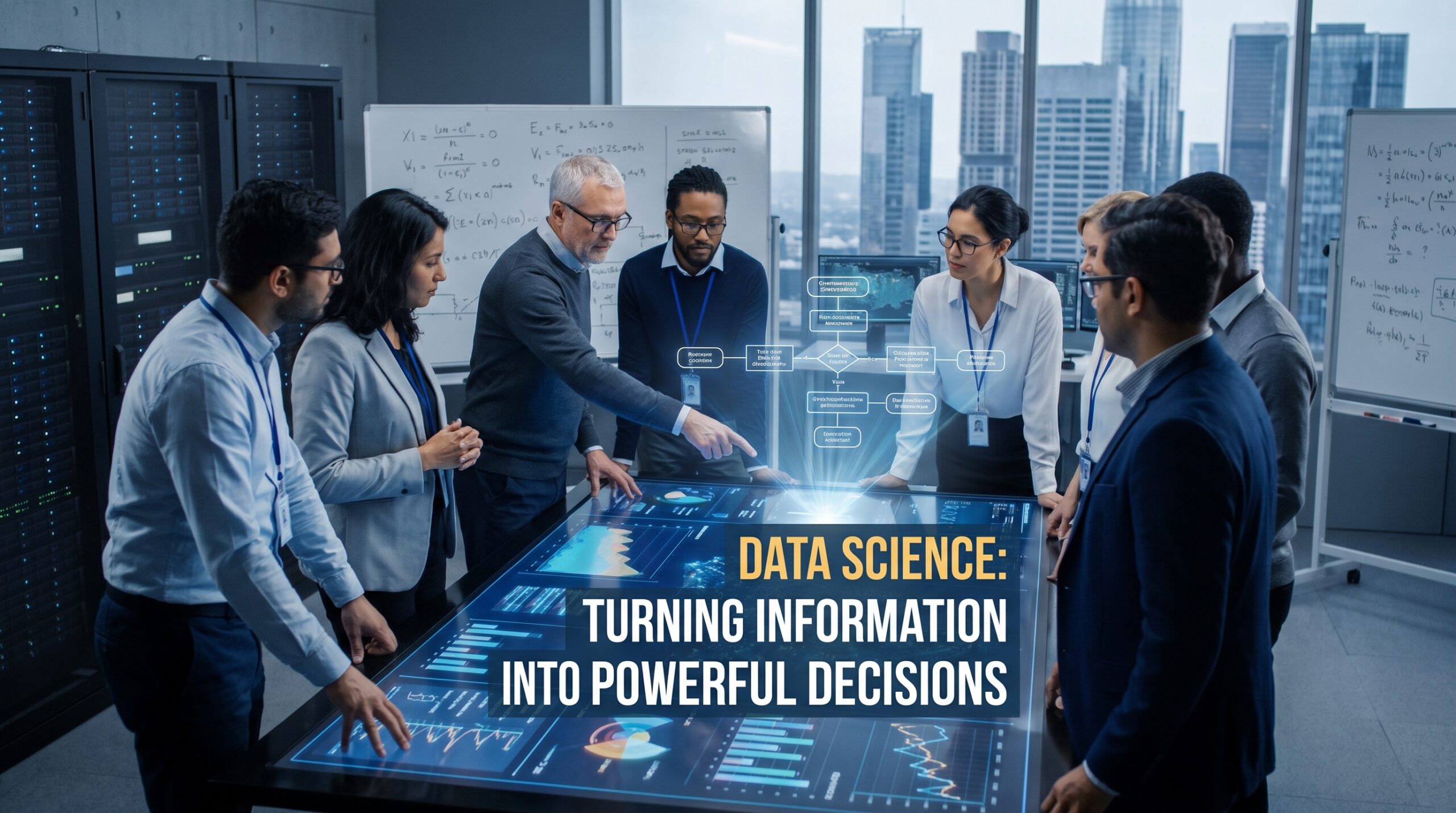
At its core, Data Science bridges the gap between massive, incomprehensible data lakes and executive decision-making. A data scientist acts as a digital detective, navigating through noise and statistical anomalies to uncover hidden patterns, subtle correlations, and insights that would be invisible to the naked human eye or traditional spreadsheet software. By applying scientific rigor and algorithmic processing to business problems, organizations transition from making decisions based on intuition, gut feeling, or historical precedent, to making decisions anchored in empirical evidence and mathematical probability.
“Information is the oil of the 21st century, and analytics is the combustion engine.” – Peter Sondergaard, former Executive Vice President at Gartner Research.
The Data Science Lifecycle
The transformation of raw information into a powerful business decision is not a spontaneous event; it is the result of a highly structured, iterative process known as the Data Science Lifecycle. This pipeline requires careful orchestration, as an error in an early stage will compound exponentially by the final stages.
1. Data Ingestion and Collection
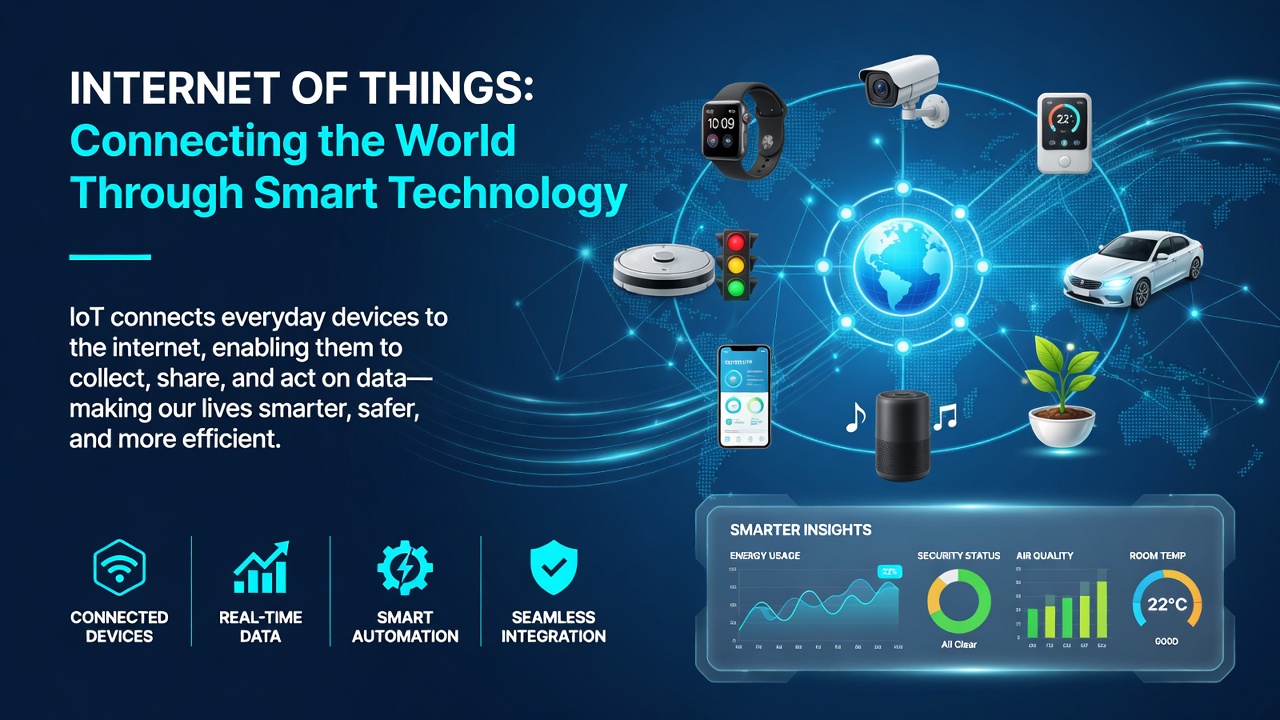
The lifecycle begins with gathering the necessary raw materials. Data can be sourced from internal relational databases, third-party application programming interfaces (APIs), massive web-scraping operations, or real-time streaming pipelines from Internet of Things (IoT) sensors. The challenge at this stage is often architectural—ensuring that systems are built to handle the volume, velocity, and variety of the incoming data streams without bottlenecking the organization’s servers.
2. Data Cleaning and Preprocessing (Wrangling)
This is universally acknowledged as the most tedious, yet most critical, phase of the entire lifecycle. Data scientists often spend up to 80% of their time simply cleaning data. Real-world data is inherently dirty. It contains missing values, duplicate entries, corrupted files, different formatting standards (e.g., European date formats vs. American date formats), and extreme statistical outliers. Preprocessing involves harmonizing these datasets, imputing missing values intelligently, scaling numerical features so that algorithms can digest them evenly, and encoding text into machine-readable numbers.
3. Exploratory Data Analysis (EDA)
Before deploying complex algorithms, a data scientist must understand the landscape of the data. Exploratory Data Analysis involves visualizing the data using histograms, scatter plots, and correlation matrices to identify underlying trends and relationships. This is the hypothesis-generation phase. During EDA, a practitioner might discover that ice cream sales and shark attacks both spike in the summer—a correlation driven by a third variable (temperature/season) rather than direct causation. Identifying these nuances prevents the construction of flawed predictive models later on.
4. Modeling and Machine Learning
This is the phase where statistical algorithms and machine learning models are applied to the prepared data. Depending on the objective, the data scientist might use classification algorithms to categorize customers, regression models to forecast future revenue, or clustering techniques to segment a market. The models are rigorously trained on historical data and then tested against unseen data to evaluate their predictive accuracy, precision, and recall. Multiple models are often built and pitted against one another to see which performs best.
5. Deployment and Communication
A highly accurate predictive model is utterly useless if it lives solely on a data scientist’s laptop. The final stage involves translating mathematical findings into business value. This can take two forms: deploying the model into a live production environment (such as integrating a recommendation engine into a company’s live website) or presenting the insights to non-technical stakeholders through intuitive data dashboards and compelling data storytelling. The ability to explain complex statistical findings to a CEO or a marketing board in plain, actionable language is often what separates an average data scientist from an exceptional one.
Core Roles in the Data Ecosystem
As the field of Data Science has matured, it has become too broad for any single individual to master completely. Consequently, the industry has fractured into specialized roles, each focusing on a distinct segment of the data lifecycle. Understanding the difference between these roles is crucial for organizations building out a data team.
| Role | Primary Focus | Key Responsibilities | Core Tools |
|---|---|---|---|
| Data Engineer | Infrastructure & Architecture | Building data pipelines, maintaining databases, ensuring data is accessible and scalable. They lay the plumbing. | SQL, Apache Spark, Hadoop, AWS, Kafka, Snowflake |
| Data Analyst | Descriptive & Diagnostic Analytics | Querying databases to build reports, creating visual dashboards, answering specific business questions about past performance. | Excel, Tableau, Power BI, SQL, basic Python |
| Data Scientist | Predictive & Prescriptive Analytics | Building machine learning models, running advanced statistical experiments, predicting future trends. | Python, R, TensorFlow, Scikit-Learn, Jupyter |
| ML Engineer | Deployment & Production | Taking the data scientist’s models and scaling them to run in live, high-traffic software environments efficiently. | C++, Java, Kubernetes, Docker, MLOps platforms |
Essential Tools and Technologies
The modern Data Science toolkit is vast, rapidly evolving, and overwhelmingly open-source. While proprietary software exists, the driving force behind the data revolution has been community-developed languages and libraries.
- Python: The undisputed lingua franca of modern data science. Python is beloved for its readable syntax and its massive ecosystem of specialized libraries. Pandas is used for data manipulation, NumPy for high-performance mathematical computing, and Scikit-Learn for implementing standard machine learning algorithms.
- R: A programming language built specifically by statisticians, for statisticians. While Python has overtaken it in general-purpose machine learning, R remains heavily favored in academia, bioinformatics, and highly complex statistical modeling.
- SQL (Structured Query Language): The oldest, yet arguably most vital tool in the ecosystem. Regardless of how advanced AI becomes, business data lives in relational databases. SQL is the universal language required to extract, join, and manipulate that foundational data.
- Data Visualization Platforms: Tools like Tableau, Microsoft Power BI, and Looker are essential for the final mile of data science. They allow practitioners to build interactive, real-time dashboards that allow non-technical executives to explore complex data visually without writing a single line of code.
Industry Applications: Decisions Powered by Data
To understand the true impact of Data Science, one must look at how it fundamentally alters the operational dynamics of major industries. The shift from intuition-based to data-driven decision-making is creating massive competitive advantages for early adopters.
Healthcare and Pharmaceuticals
In healthcare, data science is quite literally saving lives. By analyzing historical patient records, genetic markers, and real-time biometric data from wearable devices, predictive models can flag patients at high risk for conditions like sepsis or heart failure long before acute symptoms present. In pharmaceuticals, data science accelerates drug discovery. Instead of spending decades testing chemical combinations physically in a lab, data scientists use computer models to simulate how millions of synthetic compounds will interact with specific human proteins, narrowing down viable drug candidates to a handful in a matter of months.
Retail and E-Commerce
Retail giants utilize data science to master supply chain logistics and customer psychology. Through Market Basket Analysis, retailers determine which products are frequently bought together, optimizing store layouts and targeted digital promotions. E-commerce platforms rely heavily on dynamic pricing algorithms—models that analyze competitor pricing, current inventory levels, and real-time consumer demand to automatically adjust product prices hundreds of times a day to maximize profit margins.
Finance and Banking
The financial sector has utilized quantitative analysis for decades, but modern data science takes this to unprecedented levels. Credit risk scoring now goes far beyond a simple FICO score; models ingest alternative data—such as a user’s digital footprint and utility payment history—to assess the risk of lending to individuals with no formal credit history. Furthermore, data science is the backbone of modern fraud detection. Algorithms monitor millions of global transactions per second, mapping intricate behavioral patterns to identify and instantly block fraudulent credit card charges.
Logistics and Supply Chain
Companies like Amazon and FedEx utilize data science to solve complex spatial and temporal problems. Route optimization algorithms analyze weather patterns, historical traffic data, and delivery windows to calculate the absolute most efficient route for thousands of delivery drivers simultaneously. Furthermore, predictive maintenance models monitor telemetry data from delivery fleets and warehouse machinery to predict hardware failures before they occur, scheduling repairs dynamically to ensure zero unplanned downtime.
The Crucial Role of Data Quality, Ethics, and Governance
The immense power of Data Science brings with it equally immense responsibilities and pitfalls. The most pervasive threat to any data initiative is encapsulated by the famous computer science maxim: “Garbage In, Garbage Out” (GIGO). If an organization’s foundational data is biased, incomplete, or inaccurate, the subsequent decisions made by their AI models will be equally flawed—but hidden behind a veneer of mathematical authority.
This leads directly to the critical issue of Data Ethics and algorithmic bias. A machine learning model is not inherently objective; it is a mirror reflecting the data it was trained on. If a company trains an automated hiring algorithm using ten years of historical hiring data, and that company historically favored male candidates, the data science model will mathematically deduce that being male is a predictor of success and automatically penalize female applicants. This is not a hypothetical scenario; it has occurred at major tech firms. Ensuring fairness requires data scientists to actively audit their models for bias regarding race, gender, and socioeconomic status.
Furthermore, data privacy and governance have become board-level imperatives. With the implementation of sweeping regulations like the European Union’s GDPR and California’s CCPA, organizations must tightly control how they collect, store, and utilize consumer data. Data Science teams must now engineer systems that can extract macro-level insights while utilizing techniques like differential privacy and data anonymization to protect individual user identities.
The Future of Data Science
The discipline of Data Science is evolving at a breakneck pace. We are currently witnessing the rise of Automated Machine Learning (AutoML). These are sophisticated platforms capable of automating the most tedious parts of the data lifecycle—such as feature engineering and model selection—allowing business analysts to build predictive models without writing code. While some fear this will replace data scientists, the reality is that it will augment them, freeing up highly trained professionals to focus on complex architectural problems and advanced AI integration.
Additionally, the integration of Generative AI (like Large Language Models) with traditional Data Science is creating a new paradigm. Instead of manually writing SQL queries or building Python visualizations, executives will soon be able to converse directly with their data. An executive could simply type, “Explain why our Q3 margins dropped in the Asian market, and generate a forecast for Q4 assuming a 10% increase in shipping costs,” and the integrated data science backend will execute the complex code required to generate the answer instantly.
Ultimately, Data Science is no longer just a backend IT function; it is the central nervous system of the modern enterprise. As the volume of global data continues its exponential climb, the organizations that will thrive in the coming decades are those that best harness this digital raw material, turning the chaos of information into the clarity of powerful, decisive action.